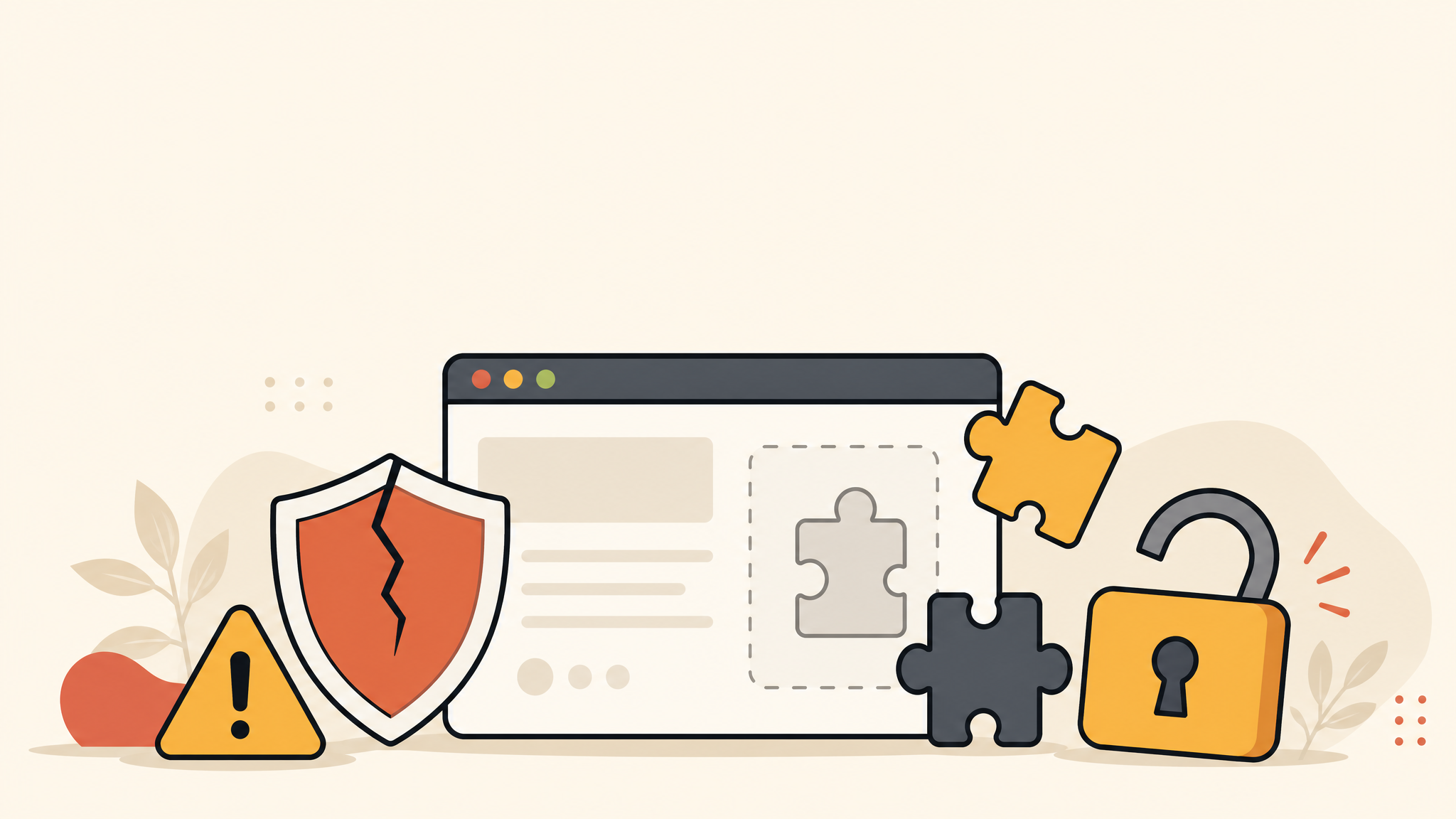
A WordPress security plugin can help protect your site, but it is not a complete security strategy by itself. Many hacked WordPress sites already had a security plugin installed when the infection started.
The problem is usually not the plugin name. It is the way the plugin was installed, configured, ignored, or trusted too much. This guide explains the WordPress security plugin mistakes that leave your site exposed and how to fix them before malware, redirects, or account abuse become serious.
 RyoheiYokoyama
Ryohei Yokoyama has supported WordPress recovery, malware removal, hacked site repair, and security cleanup for many site owners, backed by more than 20 years of engineering experience.
- Why a security plugin alone does not guarantee protection.
- Common setup mistakes that weaken login, scan, and firewall protection.
- What to check in WordPress files, plugins, users, and logs after a warning.
- When to use a plugin and when to ask for professional WordPress malware cleanup.
WordPress Security Plugin Mistakes Usually Start With Overconfidence
The first mistake is believing that installing a plugin means the site is already secure.
A security plugin is a tool. It can scan files, harden login behavior, add firewall rules, send alerts, and help detect suspicious changes. But it cannot replace updates, backups, clean hosting, strong passwords, user review, or careful plugin management.
For example, a plugin may warn you that a file changed, but it cannot always decide whether the file is a normal theme update, a malicious backdoor, or custom code added by a developer. Some malware also hides in places that basic scans miss, such as inactive themes, old backup folders, upload directories, database content, cron tasks, or compromised admin accounts.
- If the plugin is installed but alerts are disabled, you may miss the first sign of compromise.
- If updates are ignored, the plugin may know about risks but still leave vulnerable code active.
- If malware has already created an admin user, the plugin may not remove the human access problem.
If you are building a basic protection checklist, also review our WordPress security checklist for beginners. This article focuses specifically on plugin mistakes and cleanup risks.
Mistake 1: Installing Multiple Security Plugins That Fight Each Other
More security plugins do not always mean more security. In many cases, stacking several plugins creates conflicts, duplicated rules, slow scans, broken login pages, or false confidence.
Security plugins often touch the same areas: login protection, firewall behavior, file integrity checks, malware scanning, XML-RPC blocking, two-factor authentication, and email alerts. If two plugins both try to control the same behavior, the result can be unpredictable.
What can go wrong
- The login page locks out legitimate administrators.
- Firewall rules block REST API requests needed by plugins or the block editor.
- Two scan engines report different results and make cleanup harder to judge.
- The site becomes slower because several plugins scan the same files repeatedly.
Choose one main security plugin and configure it carefully. If you use a separate firewall, CDN security service, backup system, or uptime monitor, make sure each tool has a clear role.
- Use one primary WordPress security plugin.
- Use one backup system that stores backups outside the public site files.
- Use hosting or CDN firewall features only when you understand what they block.
- Document which tool sends alerts and who receives them.
Mistake 2: Leaving Default Settings After Installation
Another common mistake is installing a plugin, clicking through the setup wizard, and never checking the important settings again.
Default settings are designed to avoid breaking the average site. That is useful, but it also means some stronger protections may be disabled until you turn them on. The right configuration depends on your hosting, login workflow, users, plugins, and business risk.
Settings worth checking first
- Admin alerts: Confirm that warning emails go to an active address.
- File change alerts: Turn on notices for unexpected changes in WordPress core, themes, and plugins.
- Login protection: Enable reasonable lockouts, two-factor authentication, or suspicious login alerts.
- Scan schedule: Run automatic scans at a time that does not overload the server.
- Firewall mode: If the plugin offers advanced firewall setup, confirm whether server-level configuration is needed.
Do not enable every aggressive option at once on a live production site. Change settings in small steps, then test login, contact forms, checkout, REST API features, caching, and admin editing.
Mistake 3: Ignoring Plugin Alerts Because the Site Looks Normal
Many WordPress infections begin quietly. The homepage may still look normal while malware sends visitors to spam pages, hides links in posts, creates backdoors, or injects scripts only for search engines.
If your security plugin reports a suspicious file, unknown administrator, changed core file, or repeated login attack, do not ignore it just because the site is still loading. Early alerts are often the cheapest time to fix the problem.
- New administrator account created without your approval.
- Unknown PHP files inside
wp-content/uploads/. - Modified WordPress core files that do not match the official release.
- Repeated changes to
.htaccess,wp-config.php, or active theme files. - Outbound redirects that only appear for new visitors or search traffic.
For redirect symptoms, see our guide to the WordPress redirect hack fix. Redirect malware can be difficult because the site may behave differently for the administrator than it does for visitors.
A quick file check you can do safely
If your plugin reports unknown PHP files in the uploads folder, check whether executable files are sitting where images and media should normally be stored.
wp-content/uploads/2026/06/logo.png
wp-content/uploads/2026/06/banner.jpg
wp-content/uploads/2026/06/cache.php       <- suspicious
wp-content/uploads/2026/06/.user.ini       <- suspicious in many cases
Do not delete files blindly if you are unsure. Record the path, download a backup copy, check the modified date, and compare it with plugin alerts and server logs.
Mistake 4: Updating the Security Plugin but Leaving Vulnerable Plugins Active
Updating your security plugin is good, but it does not fix vulnerable plugins, abandoned themes, weak passwords, or exposed custom code.
Attackers often enter through a vulnerable contact form plugin, page builder add-on, membership plugin, file manager plugin, old theme, or leaked administrator password. A security plugin may detect the attack later, but the entry point remains open until you update, replace, remove, or harden the vulnerable component.
- Back up the database and files before major updates.
- Update WordPress core, active theme, and active plugins.
- Remove unused plugins and themes instead of only deactivating them.
- Check whether any plugin has been abandoned or replaced by a safer alternative.
- Review administrator users and force password resets after a confirmed infection.
If your site was already hacked, updating vulnerable plugins is only one part of cleanup. You still need to remove malware, check for backdoors, rotate credentials, and confirm that the same entry point cannot be reused. Our WordPress hacked site repair guide explains what to do before the damage spreads.
Mistake 5: Trusting One Malware Scan Without Manual Review
A plugin scan is helpful, but one clean scan does not always mean the site is safe.
Scanners are strongest when malware matches known patterns. They can struggle with custom backdoors, obfuscated PHP, malicious database content, conditional redirects, compromised user accounts, or malware hidden in files that look similar to legitimate plugin code.
After a warning, combine plugin scanning with manual checks in the places attackers commonly use.
wp-content/uploads/for PHP files or hidden files.wp-content/plugins/for unknown plugin folders or recently modified files.wp-content/themes/for suspicious code infunctions.php..htaccessfor redirect rules you did not add.wp-config.phpfor injected code before or after normal settings.- WordPress users for unknown admins or changed email addresses.
Here is an example of a suspicious redirect pattern that may appear in .htaccess. The exact code varies, but unknown redirects to unrelated domains should be treated carefully.
RewriteEngine On
RewriteCond %{HTTP_REFERER} google\. [NC]
RewriteRule ^(.*)$ https://example-spam-domain.invalid/$1 [R=302,L]
If you find suspicious code, compare it against a clean backup and official WordPress files before removing it. For infected sites, our WordPress malware removal guide covers safer cleanup steps.
Mistake 6: Not Testing Recovery Before an Emergency
Security is not only about blocking attacks. It is also about recovering quickly when something breaks.
A security plugin may help you detect suspicious changes, but it may not give you a clean restore point. If backups are stored inside the same compromised server, if restore has never been tested, or if database backups are missing, recovery can become much harder than expected.
Before an emergency, confirm where backups are stored, how often they run, whether the database is included, and how to restore the site on a staging environment or temporary location.
- Backups include both files and database.
- At least one backup copy is stored outside the website server.
- You know how to restore without overwriting newer clean content by accident.
- You can access hosting control panel, SFTP, database, and DNS if needed.
If the site is already broken and you need a path back online, see our WordPress recovery service guide for what expert recovery usually checks.
FAQ: WordPress Security Plugin Mistakes
Summary: Configure the Plugin, Then Verify the Site
WordPress security plugins are useful, but they become risky when site owners treat them as a one-click solution. The biggest mistakes are stacking too many plugins, leaving default settings untouched, ignoring alerts, updating only the security plugin, trusting one scan, and failing to test recovery.
A safer approach is simple: use one main security plugin, configure alerts and login protection, keep all plugins and themes updated, remove unused components, review suspicious files manually, and prepare backups before an emergency.
If You Can’t Secure or Recover Your WordPress Site Yourself
If your website shows malware warnings, redirects to strange pages, or you are not sure whether it is secure,
SiteFixNow can help clean, repair, and recover your WordPress site.
- Your WordPress site may be infected with malware.
- Security warnings appear in Google or browser results.
- You found unknown admin users or suspicious files.
- The site redirects to spam or unknown websites.
- You need urgent WordPress hacked site repair.
- Reduce visitor risk and SEO damage.
- Find hidden malware and backdoors, not only visible symptoms.
- Recover the site safely without unnecessary data loss.