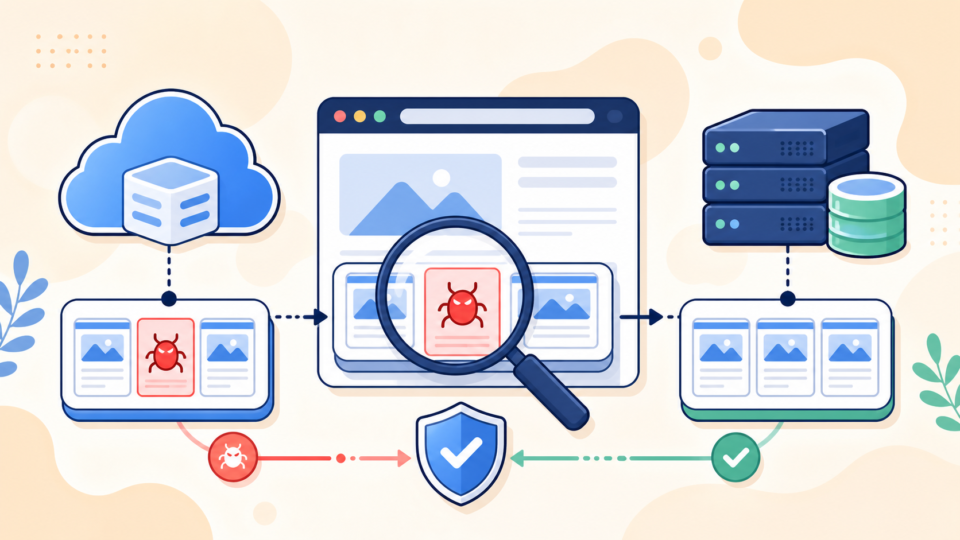
If your website is showing spam redirects, browser warnings, strange popups, or unknown files, many people call it a “website virus.” In WordPress, that usually means malware, injected code, or a backdoor that lets an attacker keep control of the site.
The hard part is that panic leads to bad cleanup. Site owners often delete random plugins, overwrite files without checking the real entry point, or restore an old backup that still contains the same weakness. If you want fast website virus removal, you need a safer order that reduces damage first and cleans the infection without losing critical data.
 RyoheiYokoyama
I’m Ryohei Yokoyama, founder of SiteFixNow. I’ve worked as an IT engineer for over 20 years and have handled many WordPress malware removal, hacked site repair, and security cleanup cases. In this article, I’ll show you how to approach website virus removal quickly without making the infection harder to track.
- What “website virus removal” usually means on a WordPress site
- How to contain an infected site before cleanup causes more damage
- Which WordPress files, folders, and accounts need to be checked first
- How to verify the infection is actually gone before trusting the site again
Website virus removal starts with containment, not random WordPress deletions
The main point is that fast cleanup is not the same as reckless cleanup. If visitors are being redirected to spam pages or malware is loading in the browser, you do need to act quickly. However, deleting files without checking what they do can destroy useful evidence, break your theme, or remove the wrong plugin while the real backdoor stays hidden.
A better approach is to reduce exposure first, then clean with a plan. That usually means making a backup, recording the symptoms, and temporarily limiting access if the site is actively harming visitors. This gives you a safer starting point and makes the later cleanup much more effective.
- Save a full copy of files and export the database before changing anything
- Take screenshots of warnings, redirects, fake pages, or strange admin users
- Write down recent plugin installs, theme edits, password leaks, or hosting changes
- Temporarily restrict public access if customers or search traffic are at risk
Containment does not solve the infection by itself, but it stops extra damage while you investigate. If the site is already compromised, a rushed cleanup is one of the easiest ways to miss the real cause.
A temporary access restriction can buy you cleanup time
If you use Apache and need a short emergency lock while you inspect the site, an access rule in .htaccess can reduce public exposure. Replace the sample IP with your own address and remove the rule once the site is clean.
Order Deny,Allow
Deny from all
Allow from 203.0.113.10WordPress hacked site repair gets easier when you slow down long enough to preserve evidence and reduce live damage.
Check the WordPress files and folders where website viruses usually hide
The reason many DIY virus removals fail is that the visible symptom is not the whole infection. A redirect on the homepage may come from injected code in header.php, a rogue file in wp-content/uploads/, an automatically loaded script in mu-plugins, or a stolen admin account that recreates the malware after you delete it.
That means you need to check high-risk locations first instead of scanning your entire hosting account at random. On WordPress sites, infections often hide in places that look harmless because attackers want the malicious file to blend in with normal content.
wp-config.phpfor injected includes, fake settings, or hidden remote calls.htaccessfor redirect rules, rewrite abuse, or strange handlerswp-content/uploads/for PHP files that should never be in a media folderwp-content/mu-plugins/for automatically loaded backdoorswp-content/plugins/and theme files for tampered code or abandoned extensions
wp-config.php
.htaccess
wp-content/uploads/
wp-content/mu-plugins/
wp-content/plugins/
wp-content/themes/your-theme/functions.php
wp-content/debug.log
Look for unfamiliar PHP files, obfuscated code, unexpected base64_decode usage, random file names that imitate cache tools, or references to unknown domains. If you see a file like wp-content/uploads/2026/06/wp-check-helper.php, do not assume it belongs there just because the name sounds technical.
Do not ignore unknown WordPress admin users during virus cleanup
File cleanup alone is not enough if the attacker still has access. Review all administrator accounts, check when they were created, and compare them against legitimate team members. A fake admin can reinstall the same plugin, upload a new backdoor, or alter settings again after you think the website virus is gone.
WordPress malware removal and WordPress malware infection recovery are useful references if you want a deeper view of hidden reinfection paths.
Clean the infected WordPress site in a safe order so the virus does not come back
The best point here is simple: replace what you can trust, then review what you cannot trust. Known WordPress core files should be replaced from a clean official package. Plugins and themes should be reinstalled from trusted sources wherever possible. Custom code should be reviewed separately so you do not erase legitimate business functionality by accident.
This order is faster in practice because it reduces guesswork. Instead of staring at every line in every file, you restore the known-good parts first and spend your review time on the files that actually require judgment.
- Replace compromised WordPress core files with a clean matching version
- Remove or reinstall suspicious plugins and themes from original vendor packages
- Review custom files such as
functions.php, snippets, and drop-ins one by one - Delete rogue users, suspicious scheduled tasks, and malicious database entries
- Scan again before reopening the site to normal traffic
While doing this, turn on logging so WordPress writes technical warnings to a file instead of showing them to visitors. That makes it easier to catch hidden references that still point to malicious files.
define( 'WP_DEBUG', true );
define( 'WP_DEBUG_LOG', true );
define( 'WP_DEBUG_DISPLAY', false );
After enabling those settings, review wp-content/debug.log for repeated calls to deleted plugins, suspicious includes, or files inside the uploads directory. If malware code survives the first cleanup pass, the log often reveals where it is still loading from.
Reset passwords, salts, and server access after WordPress virus removal
Website virus removal is incomplete if the attacker still has access. The infection may have started through WordPress admin, FTP, SFTP, SSH, a vulnerable plugin, or a reused hosting password. If you only delete malware and do not close those access paths, the site can be compromised again very quickly.
That is why access resets are part of cleanup, not an optional bonus. You want to invalidate sessions, rotate credentials, and review permissions immediately after the main infection has been removed.
- Reset all WordPress admin passwords and remove unknown users
- Change hosting panel, FTP, SFTP, SSH, and database passwords
- Rotate WordPress salts so active sessions are invalidated
- Update WordPress, themes, plugins, and PHP where it is safe to do so
- Review file permissions and disable anything unnecessary for write access
define( 'AUTH_KEY',         'replace-with-new-random-value' );
define( 'SECURE_AUTH_KEY',  'replace-with-new-random-value' );
define( 'LOGGED_IN_KEY',    'replace-with-new-random-value' );
define( 'NONCE_KEY',        'replace-with-new-random-value' );
define( 'AUTH_SALT',        'replace-with-new-random-value' );
define( 'SECURE_AUTH_SALT', 'replace-with-new-random-value' );
define( 'LOGGED_IN_SALT',   'replace-with-new-random-value' );
define( 'NONCE_SALT',       'replace-with-new-random-value' );
These values should be replaced with fresh random strings from a trusted source, not copied exactly as shown. Once changed, old logged-in sessions are invalidated, which can help kick out attackers who still have stolen cookies.
WordPress security checklist for beginners is a good next step when you need practical hardening tasks after the emergency cleanup.
Verify the infected WordPress site is actually clean before you trust it again
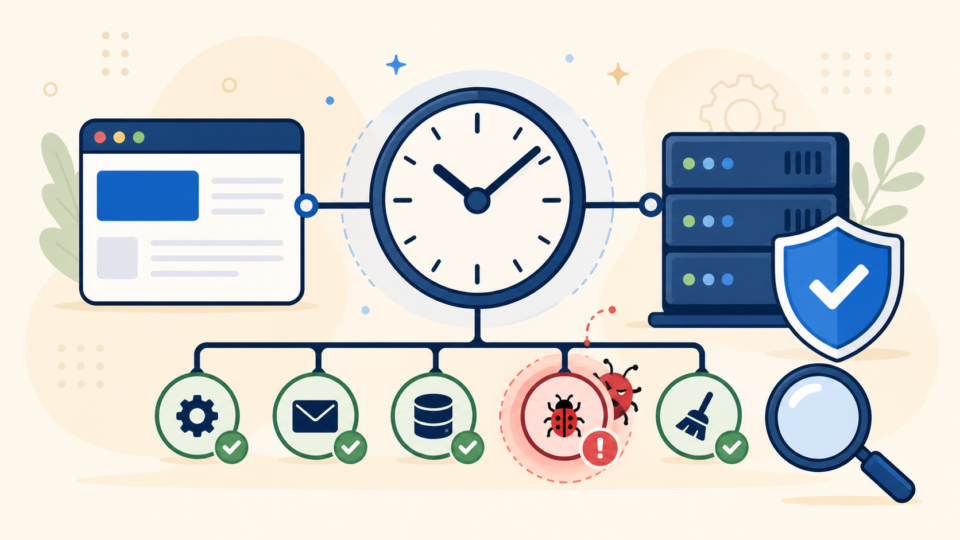
The final point is that a site is not “clean” just because it looks normal for ten minutes. Many infections return only after a cron event runs, a plugin hook fires, or a search bot hits a hidden URL. That is why verification matters as much as the removal itself.
You should test both visible behavior and hidden signals. Scan the site, review logs, inspect source code, and confirm that suspicious redirects or warnings are really gone. If possible, check the site from a clean device or browser session as well.
- Confirm redirects, fake pages, and malware warnings no longer appear
- Review server logs and
debug.logfor suspicious file calls - Check search results and key landing pages for spam titles or injected content
- Rescan the site after updates and access resets are complete
- Monitor the site for a few days instead of assuming the first cleanup was enough
If you still see unknown file changes, fresh redirects, or malware alerts after completing all of the steps above, the infection probably has a persistence method you have not found yet. That is usually the moment when expert help saves more time than another DIY round.
When to stop DIY website virus removal and get expert WordPress help
DIY cleanup is reasonable when the site is simple, the symptoms are limited, and you have recent clean backups plus technical access. It becomes risky when the site stores customer data, supports revenue, contains custom code, or keeps getting reinfected after you already changed the obvious things.
At that point, the cost of delay can exceed the cost of expert cleanup. Lost leads, SEO damage, blacklisting, and repeated downtime add up quickly when an infected WordPress site stays unstable for days.
WordPress recovery service can be the faster option when you need cleanup, access review, and recovery checks done in the right order.
Frequently asked questions about website virus removal on WordPress
Summary
Website virus removal on WordPress works best when you contain the damage first, inspect the right files and accounts, clean in a safe order, reset access completely, and verify that the infection is truly gone. Fast action matters, but a disciplined process matters more if you want to avoid reinfection and extra downtime.
If you need to clean an infected WordPress site fast, focus on evidence, safe replacement, access resets, and verification. That is the difference between temporary relief and actual recovery.
If You Can’t Secure or Recover Your WordPress Site Yourself
If your website shows malware warnings, redirects to strange pages, or you are not sure whether it is secure,
SiteFixNow can help clean, repair, and recover your WordPress site.
- Your WordPress site may be infected with malware.
- Security warnings appear in Google or browser results.
- You found unknown admin users or suspicious files.
- The site redirects to spam or unknown websites.
- You need urgent WordPress hacked site repair.
- Reduce visitor risk and SEO damage.
- Find hidden malware and backdoors, not only visible symptoms.
- Recover the site safely without unnecessary data loss.